



Technically Restored / 2025-2026
From Mediterranean Slumber to the Open Road
The technical restoration of the Dodge D60 L9 began with a remarkable discovery in southern France, not far from the Mediterranean coast. The vehicle had been standing still for decades, carefully stored under a protective cover and with its wheels resting on blocks to preserve the tyres. This thoughtful storage and a previous optical restoration meant that, despite its long period of inactivity, the car remained in a relatively well-preserved and complete condition — making it an ideal candidate for a full technical restoration.
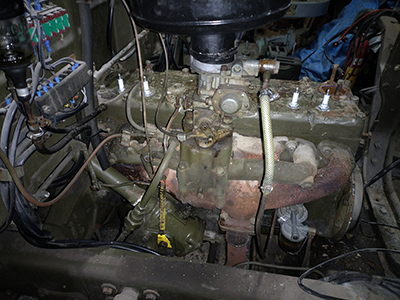
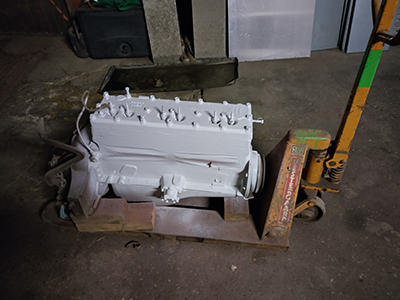
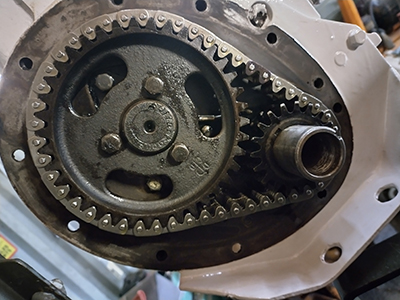
The first and most intensive phase focused on the engine. The original motor was carefully dismantled, inspected, and rebuilt to factory specifications, and repainted in its original off-white colour. The carburettor was refurbished, and the cooling system was overhauled to ensure reliable operation under modern driving conditions. Great care was taken to preserve as many original parts as possible, maintaining the authenticity of the drivetrain while ensuring long-term durability.
Parallel to the mechanical work, the electrical system underwent a partial renewal. This update not only improved reliability but also allowed for the discreet integration of modern safety features. One of the most notable additions was the installation of indicators (turn signals), which were not standard on the vehicle at the time of its production. These were carefully integrated into the design in a way that respected the car’s original aesthetic while making it compliant with current road regulations.
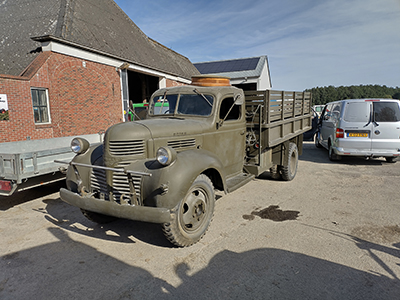
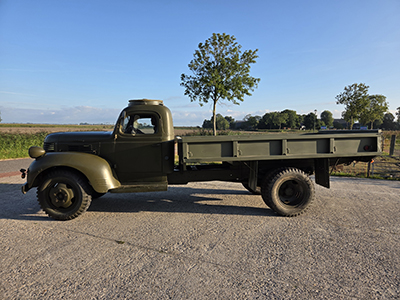
The body restoration required only minimal intervention, as the vehicle had remained in relatively good condition since the previous restoration. Most of the work focused on correcting small deviations from the original specifications rather than undertaking major repairs. One such element was the wooden escape hatch ring on top of the cab, which had been replicated by a previous owner. Although well-crafted, it did not fully match the original proportions, so it was carefully modified — its height reduced to reflect the correct profile — before being properly refitted to the cab roof.
Attention was also given to the front bumper, a characteristic feature of many Canadian built World War II vehicles. It had been fitted with incorrect springs, which were not consistent with the original design. These were removed and replaced with newly manufactured springs, produced as exact replicas of the originals to ensure both authenticity and proper function. The remaining bodywork required only light refinishing and preservation, maintaining as much of the original material as possible.
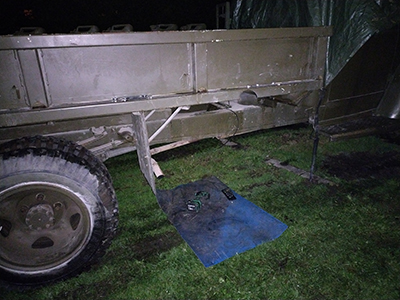
Additional restoration work included refurbishing the suspension, braking system, and interior components. Rubber bushings, brake lines, and seals were replaced, while interior elements were either restored or recreated using materials that closely resembled the originals.
The result is a fully revived Dodge D60 L9 that balances historical accuracy with practical usability. What was once a slumbering relic found near the Mediterranean has been transformed into a roadworthy classic — capable of being driven and appreciated while preserving the character and engineering of its era.
This vehicle is currently for sale. Contact us for more information.
Specifications
| Brand | Dodge (Chrysler Canada) |
| Type | D60 L9 (US type T110) |
| Country | Canada |
| Year | 1943 |
| No. Built | 137 127 (total D60 types) |
| Mass | 3 540 kg (7 865 lbs) |
| Length | 655 cm (258 in) |
| Width | 213 cm (84 in) |
| Height | 315 cm (124 in) |
| Engine | Chrysler straight-six flathead, 95 hp (71 kW) |
| Transmission | 4-speed manual |
| Suspension | Leaf spring, 2×4 |
| Fuel Capacity | 227 L (60 US gal) |
| Operational Range | Unknown |
| Maximum Speed | 64 km/h (39.7 mph) |
| Hood number | None |
| Appearance & Decals | No camouflage, no decals |